There’s been a lot of conversation and, understandably, a lot of confusion about what the One Big Beautiful Bill Act (OBBB) means for families planning and saving for college. With changes to federal loan limits, new rules for graduate and professional students, updates to repayment plans, and expanded uses for 529s, many parents are trying to sort out what matters most for their own situation.
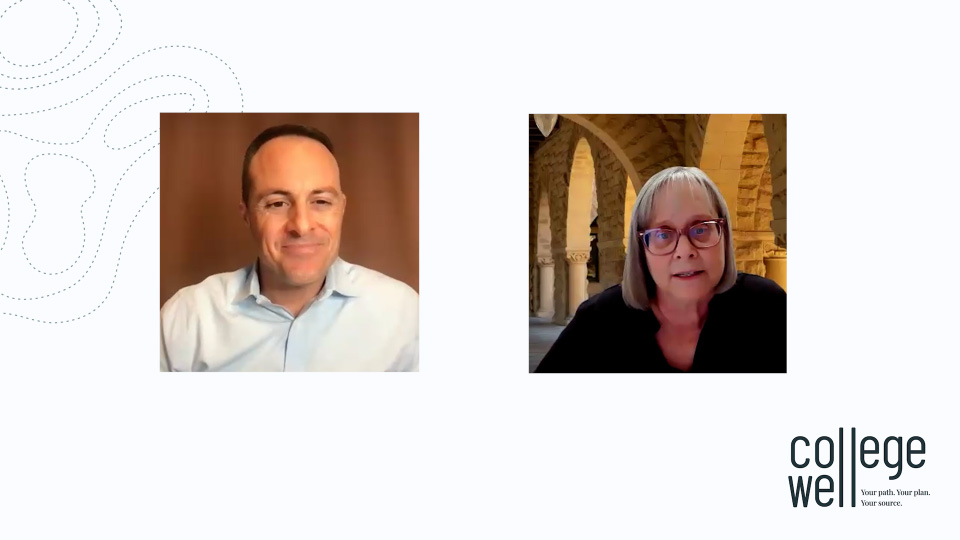
To help bring clarity, CollegeWell spoke with two experts in college financial planning: Karen Cooper, Associate Dean and Director of Financial Aid at Stanford University, and Ann Garcia, Certified Financial Planner and author of How to Pay for College. They walk through the biggest changes, what families should be watching, and how to prepare leading up to college.
Parent PLUS Loans
Under the new bill, families can borrow up to $20,000 per year for each dependent student, with a $65,000 lifetime limit per student. Karen’s advice? “You really have to plan strategically.”
“I say to families, it’s worth looking at the private loans if you know you’re going to borrow. If you have a good credit background, you might be able to get a better deal than what the PLUS loan offers.” While private loans can sometimes offer lower interest rates, Karen cautions, “they don’t have as many forgiveness provisions.”
Saving in a 529 plan can help families strike a healthier balance. “I hope for most of these families,” Karen says, “the federal parent loan isn’t at the top of their list to pay for their educational expenses.”
The Budget Conversation
What strategies should families consider now that Parent PLUS borrowing is reduced? “To me, the most important strategy is the free one, and that’s talking with your kids about what your budget for college is and making sure that their college search fits in your budget,” says Ann.
She also suggests, “If you have a few more years to college, look at your budget and see whether there’s another $100 a month that you can carve out and put toward savings so that your budget is a little bigger. And of course, use your 529, because tax-free savings are worth more than taxable savings.”
As for a college’s sticker price, Karen adds, “Don’t assume the sticker price — the price that you see, the full cost price — is the one that you would be expected to pay.” Every college offers a net price calculator on its website, so be sure to use it to get a clearer picture of the actual cost for your family.
Graduate Loan Programs
There are significant changes ahead for graduate and professional students under the new legislation. Beginning July 1, 2026, the Graduate PLUS loan will be eliminated, and families and colleges are now trying to understand the implications and explore alternative financing options. “Private loans are going to be the option,” says Karen, noting that although they allow for much higher limits, they are unsubsidized and accrue interest while students are still enrolled.
Ann adds that “parents have a lot more options than grad students do, because grad students often just don’t have the credit to take out private loans, or they’re going to need their parents to be co-signers.”
Beyond the elimination of Grad PLUS, new restrictions will limit the amount of money graduate and professional students can borrow through federal loan programs, with newly imposed annual and lifetime caps: $20,500 and $100,000 for graduate students, and $50,000 and $200,000 for professional students.
And the impact extends far beyond future doctors and lawyers. As Ann points out, “lots and lots of professions and career paths require graduate degrees and are not nearly as highly compensated as law or medicine,” creating “a big risk of eliminating large swaths of the population from even being eligible to pursue certain career paths.”
Repayment Changes

As part of the new legislation, the old system —“an absolute alphabet soup” of income-based plans — has been replaced by a single Repayment Assistance Plan (RAP), which simplifies choices but generally raises monthly payments. Under RAP, payments are tied strictly to adjusted gross income, and forgiveness for non-public service borrowers now takes 30 years and becomes taxable. Beyond RAP, borrowers will also have the option to use the standard fixed repayment plan, which is the default repayment plan.
Ann also highlights one notable loss: Parent PLUS loans will no longer qualify for Public Service Loan Forgiveness. “So, if you are a public sector worker who is planning to use Parent PLUS loans to finance your children’s education and then do public service loan forgiveness, that option is no longer available to you.”
Flexibility for 529 Plans
The new bill increases the annual amount you can use towards K-12 expenses from $10,000 to $20,000 and broadens the range of qualified educational expenses, including tutoring, test prep, credentialing programs and more. “To me as a financial advisor,” Ann says, “I think one of the benefits of the expanded uses is getting families to start saving earlier, knowing there are more ways that they could use the account.”
“Whatever path your child is on, your 529 really functions more like a launch fund for your kid,” says Ann. “You can use it for higher ed, you can use it for career and vocational training, you can use it to set them up with retirement savings.” Karen agrees: “Anything to encourage more people to save — even a little bit — I see it making such a big difference for families.”